
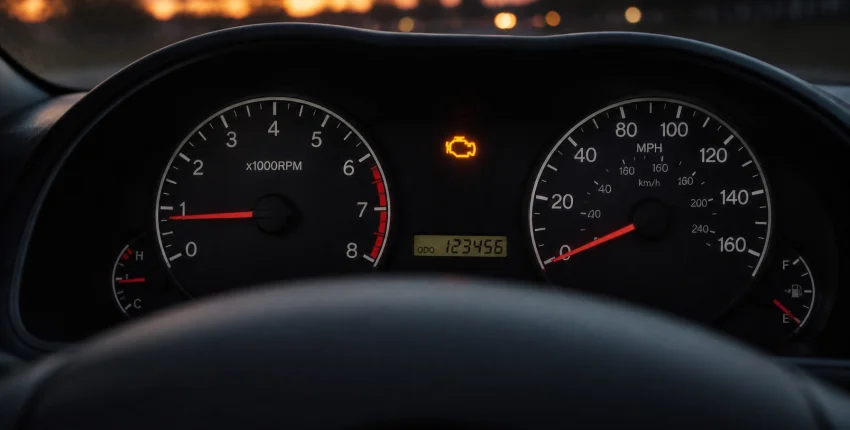
It usually happens at the worst possible time. You’re driving down Guadalupe Road, heading to work or running errands, and that glowing amber icon pops up on your dashboard. For many drivers in Tempe, the check engine light is an immediate source of anxiety. Thoughts of expensive repairs and days without a car start racing through your mind.
But here’s the secret: the check engine light isn’t a “death sentence” for your car. It’s simply your vehicle’s way of saying that one of its sensors has detected a reading that is outside the normal range. In our dry, hot Arizona climate, some of these causes are actually quite common and manageable if caught early.
At Rob’s Auto Repair, we believe in taking the mystery out of car maintenance. Before you panic, let’s look at the ten most common reasons that light might be staring back at you.
1. A Loose or Damaged Gas Cap
Believe it or not, this is one of the most frequent reasons we see a check engine light for Tempe AZ auto repair. Your car’s fuel system is pressurized to prevent vapors from leaking into the atmosphere. If your gas cap is loose, cracked, or simply worn out from the Arizona sun, it breaks that seal. The good news? It’s a cheap and instant fix.
2. Failing Oxygen (O2) Sensors
The O2 sensor monitors how much unburned oxygen is in the exhaust. This helps the car’s computer adjust the fuel mixture for the best efficiency. The intense “under-the-hood” heat we experience in the desert can cause these sensors to fail prematurely. If ignored, a bad sensor can lead to poor gas mileage and eventually damage your catalytic converter.
3. Worn Out Spark Plugs or Ignition Coils
If your car is hesitating or feels like it’s “stuttering” when you accelerate, you might have a misfire. Heat puts a lot of stress on your ignition system. Spark plugs and coils that are past their prime will struggle to provide a clean spark, triggering the light. Keeping up with routine car maintenance is the best way to prevent this.
4. Overheating and Cooling System Issues
In 110-degree weather, your cooling system is the only thing standing between your engine and a total meltdown. If your coolant level is low, your thermostat is sticking, or your radiator is clogged, the engine temperature will rise. The computer will often throw a check engine light to warn you before the gauge even hits the red zone. This is why a regular radiator repair or flush is so critical for desert drivers.
5. EVAP System Leaks
The Evaporative Emission (EVAP) system traps gasoline vapors before they escape. High temperatures increase vapor pressure, and our dry air can cause the rubber hoses in this system to crack. These “small leaks” are a common cause of failed emissions tests in Arizona but can usually be traced back to a simple hose or valve replacement.
6. Dirty Mass Air Flow (MAF) Sensor
The MAF sensor tells the engine how much air is coming in so it can add the right amount of fuel. Tempe can get incredibly dusty, and that dust eventually finds its way past the air filter. When the sensor gets dirty, the car might idle roughly or stall. Often, a professional cleaning is all it takes to resolve the issue.
7. Catalytic Converter Failure
This is the one people dread because it can be pricey. However, catalytic converters rarely fail on their own. They usually fail because another issue: like a bad spark plug or O2 sensor: was ignored for too long. If your car feels sluggish or you notice a “rotten egg” smell, it’s time for check engine light diagnostics immediately.
8. Battery and Voltage Irregularities
Modern cars are essentially rolling computers, and computers hate inconsistent power. High heat shortens the life of your battery and can cause the alternator to struggle. If the voltage drops too low, even for a split second, the car’s modules can get “confused” and trigger a fault code. We offer battery replacement services that include a full test of your charging system.
9. Heat-Soaked Sensors
Sometimes, the heat itself is the culprit. In extreme summer conditions, sensors located near the engine block can “heat soak,” leading to erratic readings. While the light might go off once the car cools down, it’s always worth having the code scanned to make sure there isn’t a more permanent underlying problem.
10. Cracked Vacuum Lines
The dry Arizona air is tough on anything made of rubber or plastic. Vacuum lines help control various engine functions, and when they become brittle and crack, they create leaks that the computer quickly notices. These are often easy to spot during a visual inspection of your belts and hoses.

Diagnosis vs. Guesswork
When that light comes on, many people are tempted to go to a parts store, get a free code read, and start buying parts. However, a code like “P0171 – System Too Lean” doesn’t tell you what is broken: it just tells you the engine is getting too much air. It could be a vacuum leak, a dirty sensor, or a fuel pump issue.
At Rob’s Auto Repair, we don’t just “read codes”; we perform a real diagnosis. With over 29 years of experience and an ASE Master-Certified technician at the helm, we use professional-grade tools to find the actual root cause. This saves you money in the long run by ensuring you aren’t paying for parts you don’t need.
Honest Service You Can Count On
We know that visiting a mechanic can be stressful. That’s why we focus on transparency. We’ll explain exactly what the light means, show you the problem, and give you an honest estimate with no hidden fees. Plus, most of our repairs are backed by a 2-year/24,000-mile warranty, giving you peace of mind long after you leave the shop.
Whether it’s a simple gas cap or a complex electrical issue, we’re here to help drivers in Tempe get back on the road safely. We service all makes and models, including classics and EVs, so you can trust your vehicle is in good hands.
Don’t let a dashboard light ruin your week. Schedule an appointment at Rob’s Auto Repair today for a professional check engine light diagnostic and get the answers you need.