
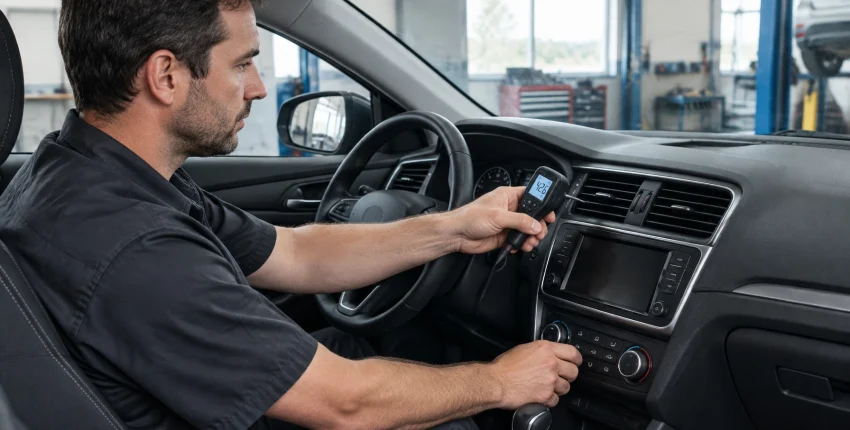
In Tempe, a car’s heater can go months without much use. The air conditioning handles the long, hot season, and the heating system may not get switched on until an unexpectedly chilly morning. That first blast of cold air can be more than uncomfortable: it may point to a cooling-system or climate-control problem that deserves attention.
Do a few simple checks before you need the heater for your morning commute. They can help you spot a developing issue, but they can’t replace a proper diagnosis. If your car heater is blowing cold air, find out why before replacing parts.
How your car’s heater makes warm air
On many gasoline-powered cars, the heater uses heat from the engine. Engine coolant, a fluid that helps control engine temperature, circulates through a small radiator-like part called the heater core. A blower motor pushes cabin air across the heater core, and that warmed air flows through the vents.
A blend door inside the dashboard directs air through or around the heater core to control cabin temperature. An electric part called a blend door actuator moves that door when you adjust the temperature setting.
That means a cold cabin can have several causes. The engine may not be getting warm enough, hot coolant may not be reaching the heater core, or the climate controls may not be directing air through it. If there’s little or no airflow, the blower motor or its electrical controls may be involved.
Electric vehicles can use different heating systems, such as a heat pump or an electric heater. Don’t attempt to work on high-voltage components yourself; have those systems checked by a qualified technician.
Why a heater blows cold air
- Low coolant or a leak: If the coolant level drops, there may not be enough fluid circulating through the heater core. A leak can come from a hose, radiator, water pump, heater core, or another cooling-system component. Simply topping it off won’t fix the underlying problem.
- A thermostat stuck open: The thermostat helps the engine reach and maintain its normal operating temperature. If it stays open, the engine may run cooler than it should, leaving the heater with less heat to use.
- A restricted heater core: Deposits or debris can reduce coolant flow through the narrow passages inside the heater core. One clue may be weak heat even when the engine reaches its normal temperature.
- A faulty blend door actuator: If the actuator can’t move the blend door correctly, the system may keep sending air around the heater core. You might hear clicking behind the dashboard or notice that adjusting the temperature makes little difference.
- A blower motor problem: If warm air isn’t moving through the vents, check the airflow itself. No airflow, or airflow that works only at certain fan speeds, may point to the blower motor or its controls rather than the heater core.
- Air trapped in the cooling system: Air can enter after a repair, coolant loss, or incorrect refill. It may interrupt circulation through the heater core. Properly bleeding the system requires the correct procedure for your vehicle.
These symptoms can overlap. A low coolant level, for example, can also signal a leak that risks engine overheating. Get the cause identified rather than guessing at a part.
A pre-winter heater checklist for Tempe drivers
Take these steps while your vehicle is parked safely. Use your owner’s manual for vehicle-specific instructions.
- Check the coolant level only when the engine is cold. Look at the reservoir and compare the level with its markings. Never open a radiator cap or pressurized coolant reservoir when the engine is hot; escaping steam or hot fluid can cause serious burns. If the level is low, arrange an inspection instead of repeatedly topping it up.
- Watch the temperature gauge as the engine warms up. A gauge that stays unusually low may support a thermostat concern. A gauge that climbs toward overheating is more urgent. Don’t keep driving to “see if it settles.”
- Test the heater before you need it. Once the engine has warmed up, try several temperature and fan settings. Note whether the air gets warm, whether airflow is steady, and whether the temperature changes when you adjust the controls.
- Pay attention to unusual smells or dampness. A sweet smell inside the cabin, unexplained coolant loss, or damp carpet near the front footwells can point to a leaking heater core. Don’t ignore these signs or mask the smell with an air freshener.
- Check the defrost setting. Make sure warm air reaches the windshield and that the system can clear fog. If you can’t maintain a clear view, don’t drive until the visibility problem is resolved.

Don’t confuse coolant service with air-conditioning service
Coolant matters in Tempe’s long hot season because it helps regulate engine temperature and, on many gasoline vehicles, supplies heat to the cabin. Keeping the cooling system in good condition helps protect the engine from overheating.
But coolant does not run the air conditioning. The AC system uses refrigerant and separate components to cool cabin air. A coolant flush can refresh the engine cooling system when service is due; it does not repair or recharge the AC. If both systems seem to have trouble, have each one checked on its own merits.
Service intervals and coolant types vary by vehicle. Follow the maintenance schedule in your owner’s manual, and ask a technician to check the coolant’s condition and look for leaks before recommending a flush. Learn more about radiator repair and coolant flush service in Tempe.
When to stop driving
Stop in a safe place and shut off the engine if the temperature gauge enters the danger zone, a temperature warning appears, or you see steam. Don’t open the coolant cap while the engine is hot. Continuing to drive an overheating vehicle can cause serious engine damage.
A strong sweet smell, visible coolant leak, or sudden loss of heat also deserves prompt attention. If the windshield won’t clear enough for safe visibility, don’t drive until you can see clearly. Arrange an inspection or roadside assistance as needed.
Get a diagnosis before replacing parts
A heater problem doesn’t automatically mean you need a new heater core. A technician can check coolant level and condition, look for leaks, assess engine warm-up, test airflow, and inspect the blend door controls. That process helps identify the cause before anyone recommends a repair.
At Rob’s Auto Repair, an ASE Master Certified and BMW-Certified technician with more than 29 years of experience works on all makes and models, including classic cars and electric vehicles. We provide free estimates, explain our findings and pricing, and offer same-day service whenever possible. Qualifying repairs come with a 2-year/24,000-mile warranty. A $20 discount is available on service repairs over $100, and financing options are available through Snap Finance and Synchrony.
If you’re searching for Tempe, AZ auto repair, car repair in Tempe, or experienced mechanics in Tempe, don’t wait for the first cold morning to test your heater. Rob’s Auto Repair is at 250 W Guadalupe Rd Unit 6, Tempe, AZ 85283. Call 480-210-1044 or book an appointment online. Get an honest estimate and a clear diagnosis before deciding on repairs.